

Why Kitchen Renovation Costs Catch Homeowners Off Guard
Kitchen renovation quotes can feel like a foreign language when you first see them. One day you’re dreaming about gleaming granite countertops, custom shaker cabinets, and a state-of-the-art gas range. The next, you’re staring at a multi-page document with a final number that makes your mortgage payment look like pocket change. It’s a classic case of sticker shock, and it happens to the best of us.
Quick Answer: What to Expect in Kitchen Renovation Quotes
- Average cost range: $13,000 – $45,000+ depending on scope
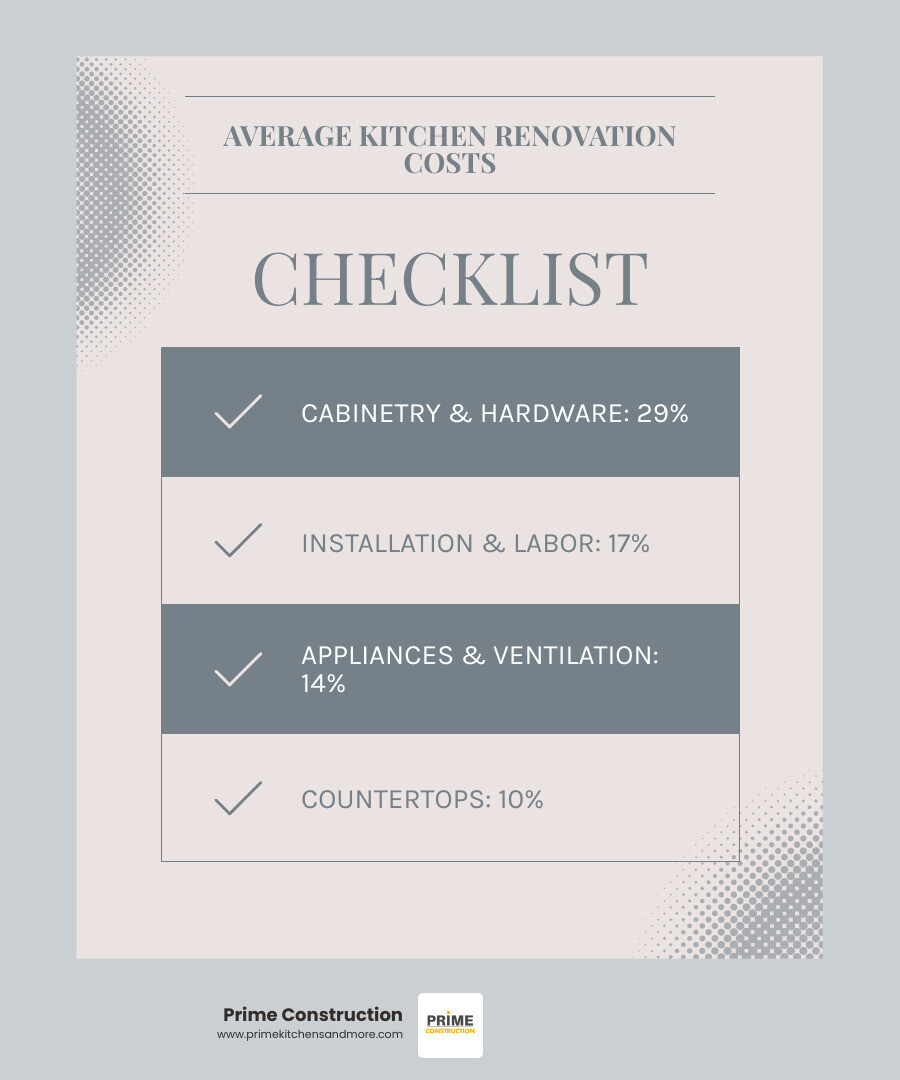
- Biggest expense: Cabinetry (typically 29% of budget)
- Labor costs: 40-50% of total project cost
- Contingency fund: Set aside 15-20% for unexpected issues
- Timeline: Minor updates (2-4 weeks), major remodel (6-12 weeks)
Here’s the reality: most Orlando homeowners underestimate kitchen renovation costs by 20-40%. It’s not because contractors are trying to pull a fast one. It’s because a kitchen is the most complex room in your house. It’s a high-traffic hub packed with intricate plumbing, specialized electrical wiring, and structural components that all need to work together in perfect harmony. Every choice, from the type of drawer pulls to the placement of an outlet, has a ripple effect on the final cost.
The good news? Understanding what goes into those quotes gives you power. When you can decipher the line items and know why one cabinet costs $8,000 while another is $3,000, or why skilled labor makes up nearly half your budget, you transform from a passive recipient of a price to an active, informed partner in your renovation. You can make smarter decisions, ask the right questions, and allocate your funds to the features that matter most to you.
Whether you’re planning a simple, budget-friendly refresh or a complete gut renovation that would make a celebrity chef jealous, this guide will help you decode those intimidating quote documents. We’ll help you steer the process, avoid common pitfalls, and steer your way to a kitchen that fits both your dreams and your budget.
Decoding the Document: What’s Typically Included in Kitchen Renovation Quotes?
Getting your first kitchen renovation quote can feel overwhelming. You’re expecting a simple price, but instead, you get a multi-page document that looks like it was written by an accountant. Don’t panic – this detailed breakdown is actually your best friend. A vague, one-page quote is a red flag. A thorough, itemized quote is a sign of a professional contractor who wants you to be fully informed.

A good contractor will provide an itemized breakdown that shows exactly where every dollar is going. This isn’t just paperwork; it’s your roadmap for making smart decisions. It allows you to see the cost of each component, helping you decide where to splurge and where to save. The quote should clearly outline the scope of work, detailing everything from tearing out old cabinets to installing the final light fixture. It will include a materials list spelling out every single item, a labor cost breakdown, and a clear project timeline and payment schedule.
Typical Components of a Quote
Your quote should read like a detailed shopping list for your dream kitchen. Here’s what to look for:
- Cabinetry Specifications: This is often the biggest line item, eating up about 29% of your budget. The quote should specify the type (stock, semi-custom, or custom), material (e.g., maple, oak, MDF), finish (paint, stain), hardware (handles, pulls), and any special features like soft-close drawers, pull-out pantries, or lazy Susans.
- Countertop Materials: Prices vary wildly here. Laminate might run $20-$40 per square foot, while high-end quartz or granite can exceed $100. The quote must specify the material, brand (if applicable, like Cambria or Silestone), thickness, edge style (e.g., bullnose, ogee), and total square footage, including the backsplash if it’s the same material.
- Appliance Models: A basic appliance package can cost $3,000, while a luxury suite can easily top $15,000. A vague entry like “stainless steel dishwasher” isn’t enough. Good quotes list the exact brand and model number for the refrigerator, range, dishwasher, microwave, and vent hood. This prevents last-minute substitutions and ensures you get the features you want.
- Flooring Type: The quote should detail the type of flooring (e.g., luxury vinyl plank, porcelain tile, engineered hardwood), the cost per square foot, and the labor for removal of the old floor and installation of the new one, including any necessary underlayment.
- Backsplash Details: This can range from simple, affordable subway tile to intricate, hand-painted mosaics. The quote should specify the tile material, size, pattern, and the cost of grout, sealant, and installation.
- Plumbing Fixtures: This covers the sink (material, size, type like undermount or farmhouse), the faucet (brand, finish), garbage disposal, and any new water lines for a pot filler or refrigerator ice maker. Labor for a licensed plumber should be a separate line item.
- Lighting Fixtures: Good lighting is crucial. The quote should list the number and type of fixtures, such as recessed ceiling lights, under-cabinet LED strips, and decorative pendant lights over the island. It should also include the cost of switches, dimmers, and the electrician’s labor.
- Paint Selection: Even paint should be specified. The quote should note the brand, finish (e.g., eggshell, satin), color, and which surfaces will be painted (walls, ceiling, trim).
Watch Out for These Potential Hidden Costs
Even the most detailed quote can’t predict the future. That’s why smart homeowners always budget a contingency fund of 15-20% for surprises. In our 15 years of renovating homes in the Orlando area, we’ve seen it all. Here are the most common culprits:
- Unexpected Structural Issues: You never know what’s behind the drywall. We might find a load-bearing wall where you wanted a pass-through, or find that a previous DIY job compromised a ceiling joist. These issues require an engineer and extra labor to correct safely.
- Outdated Plumbing or Electrical: Many older Florida homes have wiring or pipes that aren’t up to modern code. A new, powerful induction cooktop might require a dedicated 240-volt circuit, or we might find old galvanized pipes that need to be replaced with copper or PEX. These are non-negotiable safety upgrades that add to the cost.
- Mold or Water Damage: A small, slow leak under a sink can go unnoticed for years, leading to hidden mold and rotted subflooring. Remediation is critical for your family’s health but is an expense that can’t be quoted until the problem is uncovered.
- Permit Fees and Delays: Every county, from Orange to Seminole, has its own permitting process, fees, and inspection schedules. A professional contractor will handle this, but the costs and potential for delays are real.
- Material Price Increases: In a volatile market, the price of lumber, tile, or even appliances can change between the time of the quote and the time of purchase. A good contractor will be transparent about this possibility.
- Change Orders: This is the one hidden cost you can control. A change order is any deviation from the original plan. Deciding you want a pot filler faucet or different cabinets after the project has started will generate a formal change order, which includes the cost of the new materials and any additional labor. The 2023 Cost vs. Value study highlights that sticking to the plan is one of the best ways to protect your budget and your project’s return on investment.
The Price Drivers: Key Factors That Influence Your Renovation Cost
The total cost of your kitchen renovation isn’t just pulled out of thin air. It’s a careful calculation based on several interconnected factors that drive the price up or down. Understanding these drivers is the first step to creating a realistic budget and getting a kitchen renovation quote that aligns with your expectations.
Our experience across Orlando, Winter Park, Apopka, and surrounding Florida communities shows that costs are influenced by three main things: the size of your kitchen, the complexity of the project, and, most significantly, the quality of the materials and finishes you choose. A small galley kitchen getting a cosmetic facelift will have a vastly different price tag than a large, open-concept kitchen undergoing a full structural gut and remodel.
How the Scope of Work Affects Your Quote
The single most significant factor influencing your quote is the scope of work. Are we talking about a simple refresh or a complete overhaul? The level of intervention directly correlates with the price tag. We generally categorize projects into three levels:
| Renovation Type | Typical Cost Range (US) | Description |
|---|---|---|
| Minor (Cosmetic) | $10,000 – $25,000 | This is a surface-level update. It might include refacing or painting existing cabinets, replacing countertops with a budget-friendly material like laminate, installing a new sink and faucet, updating light fixtures, and a fresh coat of paint. The kitchen’s layout and all major systems (plumbing, electrical) remain untouched. |
| Mid-Range (Remodel) | $25,000 – $75,000 | This is the most common type of renovation. It involves replacing all cabinets and countertops, installing a new suite of appliances, adding new flooring, and a tile backsplash. It may also include minor layout changes, like moving the dishwasher or adding a small island, which could require some light plumbing and electrical work. |
| Major (Gut & Remodel) | $75,000 – $150,000+ | This is a complete change. We tear the kitchen down to the studs and start from scratch. This includes reconfiguring the entire layout, moving walls, relocating plumbing and gas lines, upgrading the electrical system, and installing all-new everything: custom cabinetry, high-end stone countertops, professional-grade appliances, and premium flooring. |
The Impact of Material Choices on Your Budget
After the scope of work, your choice of materials and finishes has the biggest impact on the final cost. This is where you have the most control and where you can make strategic decisions to splurge or save. Think of it as choosing between a reliable sedan and a luxury sports car—both will get you there, but the experience and the price are worlds apart.
- Cabinets: Stock cabinets from a big-box store are the most affordable option. Semi-custom cabinets offer more styles, finishes, and sizes. Custom cabinets, built specifically for your kitchen by a skilled cabinet maker, offer unlimited possibilities but come at the highest price.
- Countertops: Laminate is the most budget-friendly, while solid surface and butcher block offer a mid-range price point. The most popular choices today, quartz and natural stones like granite or marble, are at the higher end of the price spectrum due to their durability and aesthetic appeal.
- Appliances: You can purchase a complete suite of functional, entry-level appliances for under $3,000. However, if you’re dreaming of a Sub-Zero refrigerator, a Wolf range, and a whisper-quiet Miele dishwasher, your appliance budget could easily exceed $20,000.
- Flooring: Luxury Vinyl Plank (LVP) is a popular and affordable choice, known for its durability and water resistance. Porcelain or ceramic tile is a classic mid-range option, while natural hardwood or stone flooring represents a premium investment.
Understanding the Role of Labor Costs
It’s a common surprise for homeowners, but labor often accounts for 40% to 50% of the total project cost. This isn’t just one person swinging a hammer. A full kitchen remodel is a complex ballet of different trades, each with a specific skill set and licensing requirement. Your labor costs cover:
- General Contractor: The project manager who coordinates the entire renovation, from scheduling trades and ordering materials to ensuring quality control and communicating with you.
- Demolition & Prep Crew: The team responsible for safely tearing out the old kitchen and preparing the space for the new installation.
- Licensed Electrician: For moving outlets, adding circuits for new appliances, and installing all lighting.
- Licensed Plumber: For running new water and drain lines for sinks, dishwashers, and refrigerators.
- Installers: Specialized craftspeople for flooring, cabinets, countertops, and tile.
- Painters: For prepping and painting walls, ceilings, and trim.
While it might be tempting to cut costs by hiring a cheaper, unlicensed handyman, this is a risky gamble. In Florida, licensed contractors carry the necessary insurance and are accountable for their work meeting building codes. Paying for professional, skilled labor is an investment in safety, quality, and peace of mind.