
The Blue Traditional Kitchen: A Timeless Look That Still Turns Heads in 2026
Blue traditional kitchens are one of the most enduring design choices you can make for your home. Here’s a quick snapshot of what makes them work:
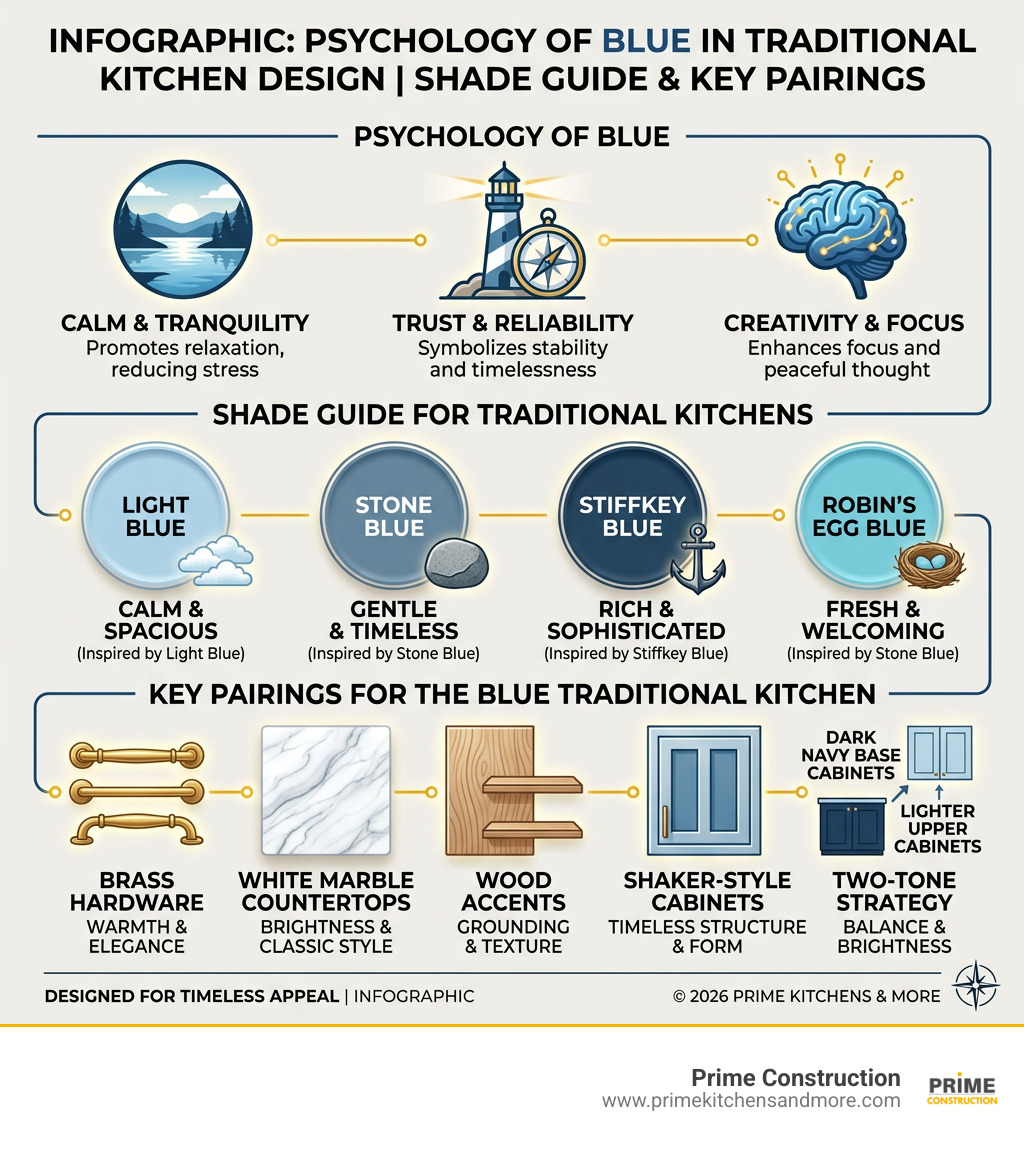
- Best paint shades: Farrow & Ball Light Blue, Stiffkey Blue, Stone Blue, or robin’s egg blue
- Top pairings: Brass hardware, white marble countertops, wood accents, and shaker-style cabinets
- Two-tone strategy: Dark navy base cabinets + lighter upper cabinets = bright, balanced look
- Best for: Homeowners who want a calm, classic space that won’t feel dated in 10 years
- Key tip: Always test paint samples in your actual kitchen light before committing
Blue has a quiet staying power that few colors can match in a kitchen. It’s calming. It’s versatile. And unlike trendy colors that fade fast, blue holds up over time – designers often compare it to a classic pair of jeans: always in style, always appropriate.
With over 34,000 blue kitchen photos on Houzz and blue cabinets ranking among the top trending colors for 2026, the numbers back up what designers have known for years. This isn’t a passing fad.
Whether you’re drawn to deep navy shaker cabinets or a soft, airy light blue finish, there’s a version of the blue traditional kitchen that fits your home, your light, and your lifestyle.
If you’re an Orlando homeowner thinking about a kitchen upgrade, this guide walks you through everything – from choosing the right shade to pairing it with the right hardware and finishes.
Simple blue traditional kitchen word guide:
Why the Blue Traditional Kitchen Remains a Timeless Choice
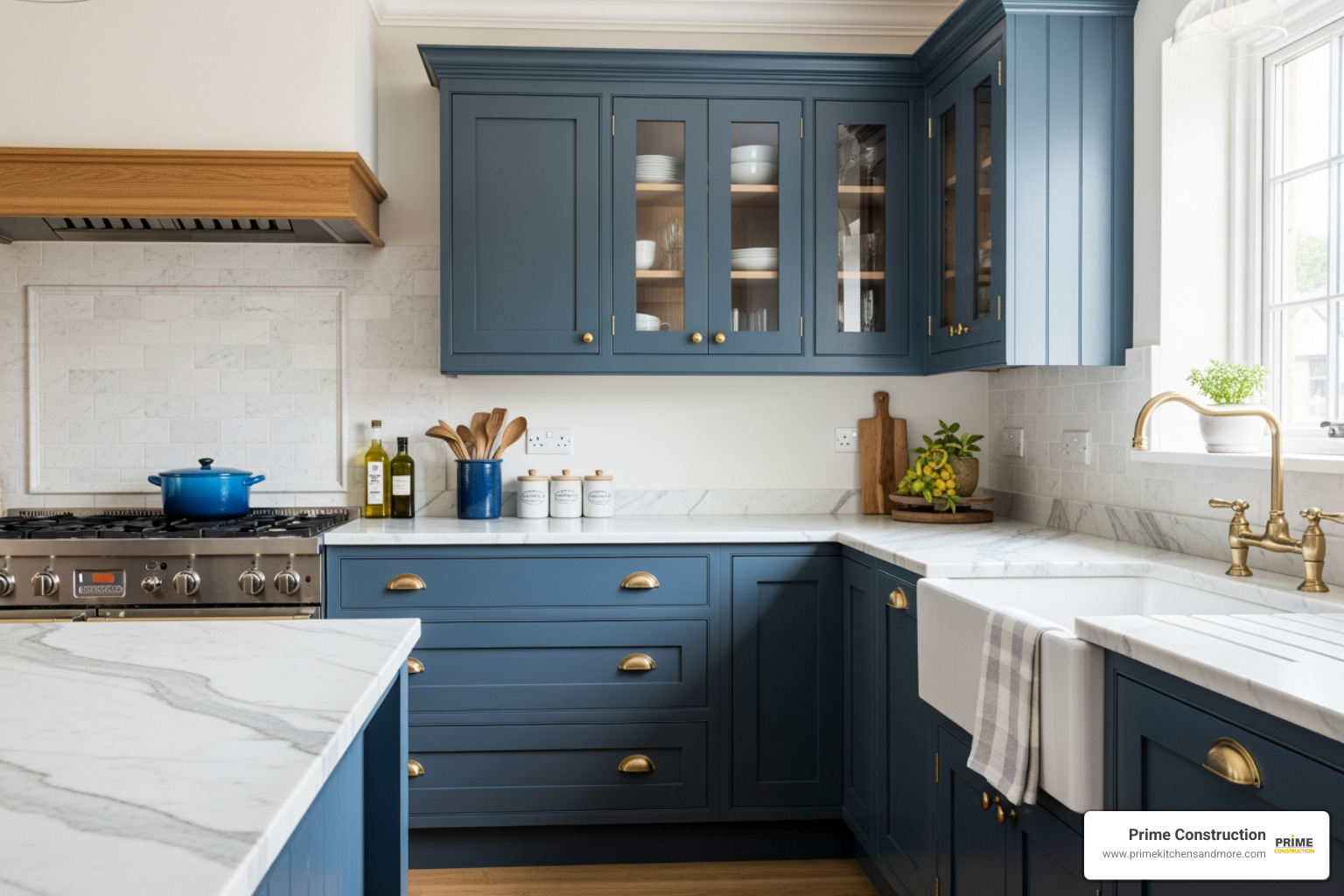
When we talk about a blue traditional kitchen, we aren’t just talking about a color; we’re talking about a mood. Blue is inherently calming, making it the perfect backdrop for the “hub of the home” where families gather, cook, and entertain. But what exactly gives it such staying power?
One of the most compelling reasons is its neutral versatility. As mentioned in our intro, designers often view blue as the “denim of the design world.” Much like a favorite pair of jeans, blue works with almost everything. It can be dressed up with polished marble and gold or dressed down with rustic wood and traditional kitchen remodel ideas.
The statistics tell a clear story. According to Houzz data, there are over 34,350 blue kitchen photos available, with more than 3,500 specifically showcasing blue cabinet finishes. This isn’t just a trend for 2026; it’s a staple. In traditional design, where longevity is king, blue offers a sophisticated alternative to the standard white or classic-cream-kitchen.
Furthermore, a blue traditional kitchen is family-friendly. Darker shades like navy are excellent at hiding the occasional smudge or fingerprint—a practical win for busy households in Windermere or Winter Park. It creates a space that feels curated and high-end but remains approachable and lived-in.
Selecting the Perfect Shade: From Farrow & Ball to Robin’s Egg
Choosing the right blue is where the magic (and sometimes the stress) happens. In a blue traditional kitchen, the shade you choose dictates the entire architectural “temperature” of the room.
Farrow & Ball has long been a favorite for traditionalists, offering shades with deep pigments and historical roots. Some of the most recommended shades include:
- Light Blue No. 22: Don’t let the name fool you. This shade is famous for being a “chameleon.” In some lights, it looks like a silvery blue; in others, it leans toward a soft sage green.
- Stiffkey Blue No. 281: This is a rich, moody navy that feels traditional yet fresh. It’s the kind of color that makes brass hardware absolutely “pop.”
- Stone Blue No. 86: A mid-toned blue that feels vintage and established, perfect for a farmhouse or classic-style-kitchen.
However, a word of caution: testing colors in natural light is non-negotiable. A blue that looks like a soft sky in a showroom might look like a cold slate in a north-facing Orlando kitchen. We always recommend painting a large sample board and moving it around the room at different times of day to see how the classic-kitchen-trends play out in your specific environment.
The Impact of Light on Your Blue Traditional Kitchen
Natural light is the silent partner in your kitchen design. The size of your room and the direction of your windows will drastically influence how a blue shade performs.
- North-Facing Rooms: These tend to have cooler, bluer light. If you put a cool-toned blue in a north-facing room, the space might feel chilly. In these cases, look for blues with warm or green undertones.
- South-Facing Rooms: These are flooded with warm sunlight, which can wash out lighter blues. Here, you can afford to go deeper and bolder with your color choices.
- Small Kitchens: While you might think you need to stick to white, a light blue can actually make a small space feel airier by “receding” visually. For more on maximizing these spaces, check out our classic-kitchen-complete-guide.
Two-Tone Strategies for a Blue Traditional Kitchen
If committing to all-blue cabinetry feels too bold, the two-tone strategy is a brilliant middle ground. This approach maintains the brightness of a traditional kitchen while adding the character of blue.
The most common strategy is placing darker base cabinets (like navy or cobalt) on the bottom and using lighter upper units (like white, cream, or light grey). This grounds the room and keeps the eye moving upward, making the ceilings feel higher. Another popular option is a blue island accent, where the perimeter cabinets remain a neutral cream-traditional-kitchen color, and the island serves as a stunning blue centerpiece.
| Feature | Navy Shaker | Glossy Light Blue |
|---|---|---|
| Vibe | Formal, Grounded, Timeless | Airy, Coastal, Modern-Traditional |
| Best Hardware | Burnished Gold, Brass | Polished Nickel, Chrome |
| Maintenance | Hides scuffs well | Shows fewer water spots |
| Room Size | Best for Large/Open spaces | Great for Small/Cottage styles |
For more inspiration on how to mix and match these elements, explore the different-kitchen-styles-for-your-home.
Architectural Details and Hardware Pairings
In a blue traditional kitchen, the cabinetry provides the color, but the architectural details provide the soul. To achieve a truly “traditional” feel, you need elements that suggest history and craftsmanship.
- Custom Range Hoods: A custom hood—perhaps in a contrasting wood tone or painted to match the cabinetry with metal strapping—acts as a focal point.
- Farm Sinks (Apron Front): Nothing says traditional like a heavy white fireclay or porcelain farm sink. The white contrast against blue cabinetry is crisp and clean.
- Arched Windows and Details: Incorporating soft curves, like an arched window over the sink or arched toe-kicks on the cabinetry, softens the straight lines of the shaker doors.
- Waterfall Marble Islands: While waterfall edges are often seen as modern, using a thick slab of white marble with heavy veining can bridge the gap between luxury and tradition.
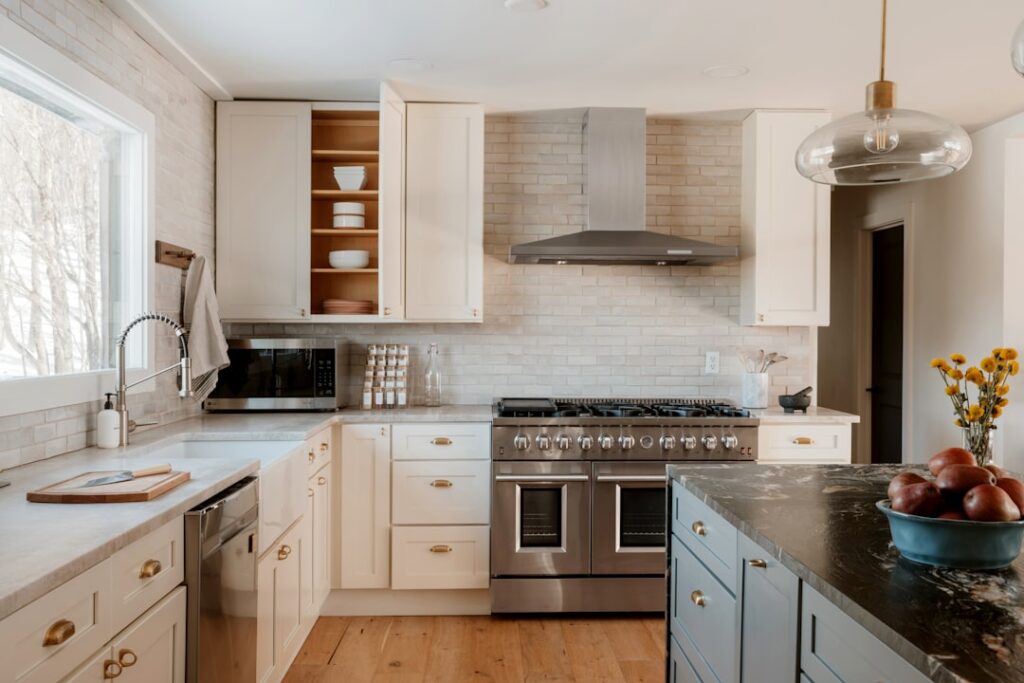
When it comes to materials, pairing blue with metals is an art form. Cooler blue undertones are the perfect foil for the variety of metals used in cooking equipment. Whether it’s a stainless steel range or copper pots, blue makes them look intentional rather than cluttered. You can see more examples of these high-end finishes in our look at the top-5-classic-style-kitchens.
Hardware and Accents for a Blue Traditional Kitchen
Hardware is the “jewelry” of the kitchen. For a blue palette, warm metals are generally the most successful choice.
- Hammered Brass & Burnished Gold: These provide a warm contrast to the cool tones of the blue.
- Un-lacquered Brass: This is a favorite for those who love a “living finish.” Over time, the brass will develop a beautiful patina, adding to the aged, traditional feel of the home.
- Wood Accents: Incorporating walnut or oak through floating shelves, flooring, or a butcher block island top adds organic warmth, preventing the blue from feeling too “cold.”
The style of the cabinet itself matters too. Most homeowners opting for this look choose classic-kitchen-cabinet-styles, such as recessed-panel shaker doors or beaded inset cabinetry.
Lessons from the Field: Showhouse Inspiration and Designer Tips
Looking at real-world successes, like the 2017 Southeastern Designer Showhouse, provides a blueprint for what works. That iconic kitchen featured Farrow & Ball Light Blue cabinets that were actually hand-brushed rather than factory-sprayed. Why? Because the subtle brushstrokes add a layer of character and “age” that a perfect factory finish simply can’t replicate.
Here are a few designer tips to elevate your blue traditional kitchen:
- Repeat Patterns and Colors: If you have blue cabinets, find a way to repeat that blue in a backsplash tile, a window treatment, or even the inside of a glass-front cabinet.
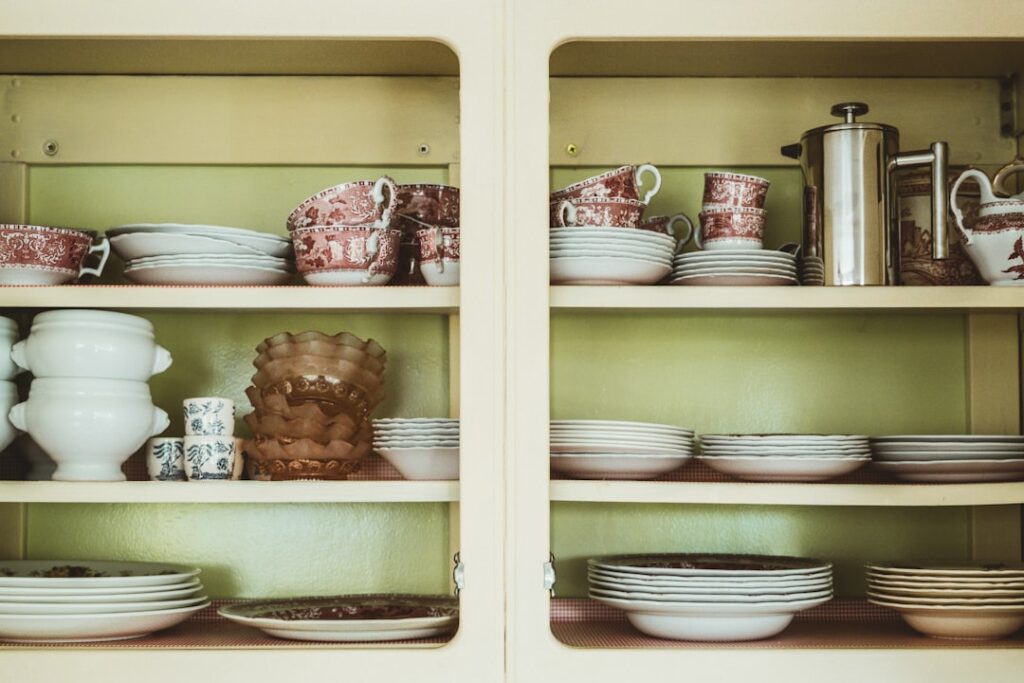
- Incorporate Antiques: A vintage rug or a set of antique scalloped plates can break up the “newness” of a remodel.
- Layer Fabrics: Traditional design is all about comfort. Use buffalo check upholstery on barstools or a linen café curtain to add softness.
- The “Jeans” Rule: Blue is a neutral. Don’t be afraid to pair it with a cream-traditional-kitchen palette for a soft, French Country inspired look.
As seen in French Country blue and white inspiration, adding a statement appliance—like a blue La Cornue range—can anchor the entire room and serve as a functional piece of art.
Frequently Asked Questions about Blue Kitchens
What are common mistakes when painting cabinets blue?
The biggest mistake is skipping the paint sample phase. Blue is incredibly sensitive to light. A shade that looks navy on a tiny swatch might look “electric blue” when applied to 40 linear feet of cabinetry. Another mistake is ignoring the undertones. Some blues lean purple, others lean green. If your countertops have a green vein and your cabinets have a purple undertone, they will clash. Finally, don’t overlook the finish; while high-gloss can be stunning, a “satin” or “eggshell” finish is usually more forgiving and traditional.
How do I pair blue cabinets with countertops?
You can’t go wrong with white marble or high-quality quartz. The white provides a sharp contrast that makes the blue feel intentional. If you want something moodier, blue kitchen countertops in natural stone (like Labradorite or certain granites) can create a seamless, monochromatic look. For a warmer, more rustic feel, a wood butcher block on a blue island is a classic “English scullery” move.
Can blue work in a small traditional kitchen?
Absolutely! The key is to use lighter shades of blue to keep the space feeling open. Using a “glossy” finish on light blue cabinets can also help reflect light around the room. Combine this with open shelving instead of heavy upper cabinets to maintain an airy feel. You can explore more about tailoring these designs to your space in our guide to kitchen-styles.
Conclusion
At Prime Kitchens And More LLC, we’ve spent 15 years helping homeowners in Orlando, Winter Park, and Windermere turn their renovation dreams into reality. We know that a blue traditional kitchen is more than just a trend—it’s a commitment to a style that is as functional as it is beautiful.
Whether you are looking for a full structural remodel—removing walls to create that open-concept family hub—or simply want to upgrade your cabinetry to a timeless shade of Stiffkey Blue, our team is here to guide you. We focus on personalized design, using premium materials and expert craftsmanship to ensure your kitchen remains the heart of your home for decades to come.
Ready to see how blue can transform your space? Start your journey with classic kitchen cabinet styles and let us help you cook up something truly timeless.