
Why Stock Kitchen Cabinets Are the Smart Choice for Orlando Homeowners
Stock kitchen cabinets are pre-manufactured units built in standard sizes and finishes, ready to ship or pick up immediately. If you’re shopping for ready-made cabinets, here’s what you need to know:
Quick Overview: Stock Kitchen Cabinets at a Glance
| Feature | Details |
|---|---|
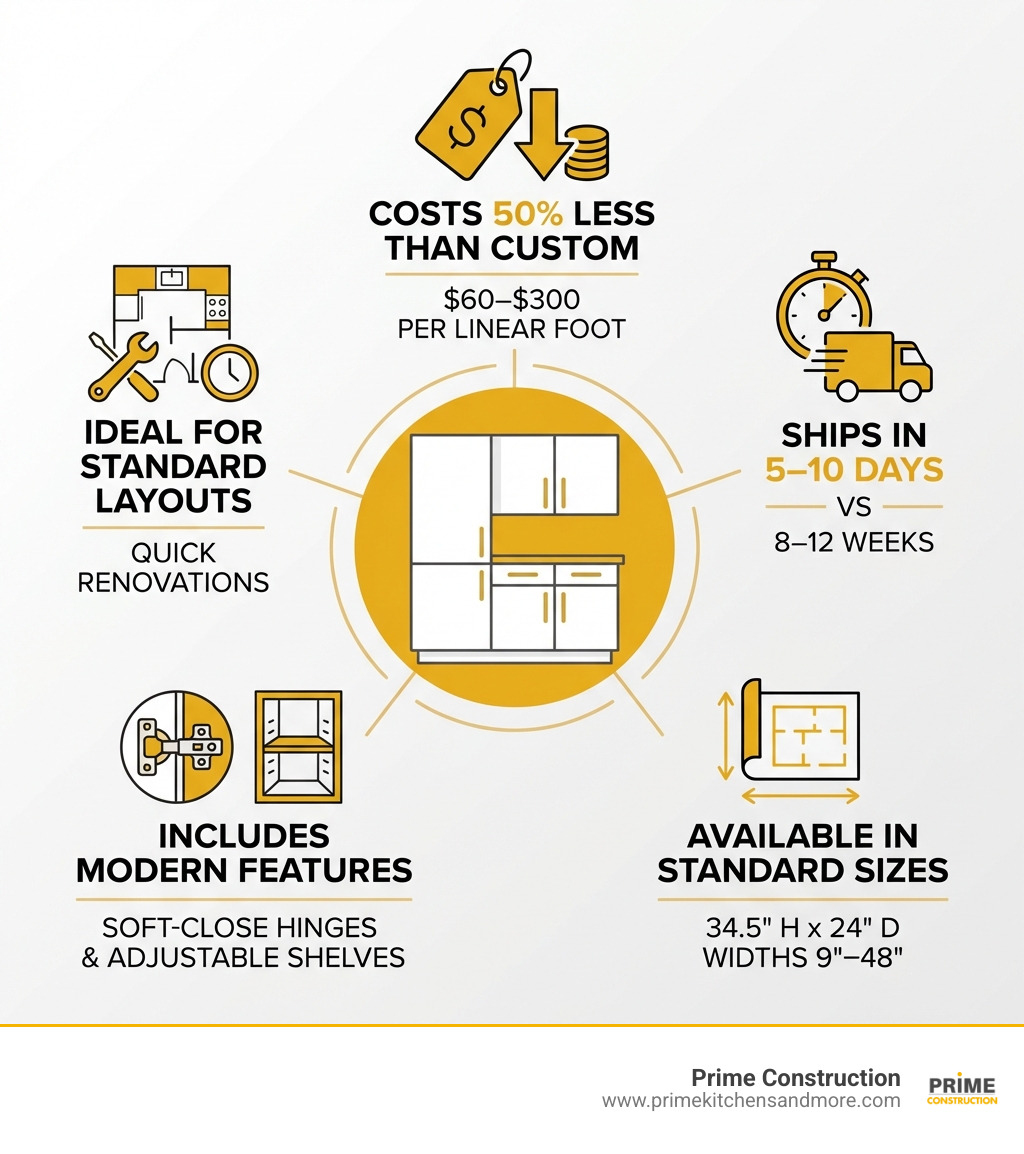
| Price Range | $60–$300 per linear foot ($2,500–$2,800 for 10×10 kitchen) |
| Delivery Time | Same-day pickup to 5–10 business days |
| Standard Sizes | 34.5″ high, 24″ deep, 9″–48″ wide (3″ increments) |
| Best For | Budget-conscious homeowners, quick remodels, DIY installation |
| Where to Buy | Big-box stores, online RTA retailers, local warehouses |
When you’re planning a kitchen remodel in Orlando, time and budget are usually your biggest constraints. You want quality cabinets that won’t break the bank or leave you without a functional kitchen for months.
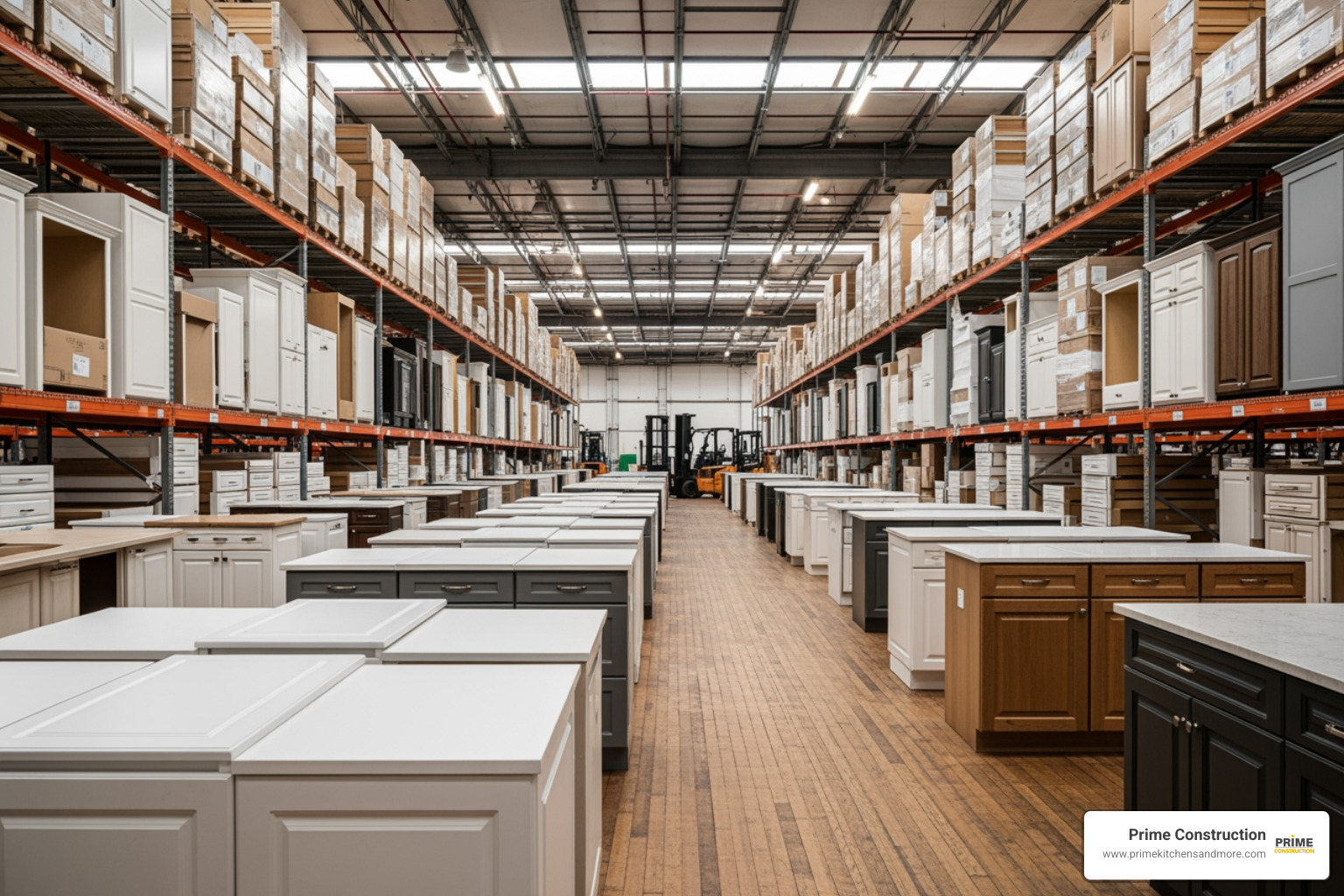
That’s exactly what stock cabinets deliver. Unlike custom options that take 8–12 weeks to build, stock cabinets sit ready in warehouses right now. You can walk into a big-box store, measure your space, and drive home with boxes the same day. Or order online and receive them within a week.
The cost difference is dramatic. While custom cabinets run $500–$1,200 per linear foot, stock options start at just $60. For a standard 10×10 kitchen, you’re looking at $2,500–$2,800 instead of $5,000 or more.
But here’s what most homeowners don’t realize: lower cost doesn’t mean low quality. Modern stock cabinets often feature plywood construction, soft-close hardware, and adjustable shelving—the same features you’d find in pricier semi-custom lines. The trade-off isn’t quality. It’s choice. You get fewer wood species, finishes, and sizes. But if your kitchen fits standard dimensions and you like popular styles like white Shaker, stock cabinets are nearly identical to what you’d pay double for elsewhere.
This guide walks you through everything you need to know before shopping at a cabinet warehouse—from understanding standard sizes to avoiding common measurement mistakes that cost time and money.
Stock kitchen cabinets vocabulary:
Understanding Stock Kitchen Cabinets and How They Compare
When we talk about stock kitchen cabinets, we are referring to the “ready-to-wear” version of the cabinetry world. These units are mass-produced on assembly lines, which allows manufacturers to keep costs low and inventory levels high. Because they are pre-manufactured, they follow a strict set of rules regarding their dimensions and styles.
To help you visualize where these fit in your remodeling journey, let’s look at how they stack up against other popular options.
| Feature | Stock Cabinets | Semi-Custom Cabinets | Custom Cabinets |
|---|---|---|---|
| Cost (Linear Foot) | $60 – $300 | $100 – $650 | $500 – $1,200+ |
| Lead Time | 0 – 10 days | 4 – 8 weeks | 8 – 12+ weeks |
| Construction | Pre-manufactured | Built-to-order (standard boxes) | Fully bespoke |
| Sizing | Fixed (3″ increments) | Modified standard sizes | Any size possible |
| Design Flexibility | Limited | Moderate | Unlimited |
Standard Sizes for Stock Kitchen Cabinets
The secret to the affordability of stock kitchen cabinets is standardization. By sticking to specific measurements, warehouses can store thousands of units that fit most American homes.
- Base Cabinets: These almost always measure 34.5 inches high (reaching a standard 36 inches once you add a countertop) and are 24 inches deep.
- Wall Cabinets: These typically come in heights of 30, 36, or 42 inches and a standard depth of 12 inches.
- Widths: This is where you have the most variety. Cabinets are available in 3-inch increments, usually ranging from 9 inches to 48 inches wide.
- Pantry/Utility Cabinets: These tall units are perfect for storing pots, pans, and dry goods, often standing 84 to 96 inches tall.
Stock vs. Semi-Custom vs. Custom
The main difference lies in the level of personalization. With stock kitchen cabinets, you buy what is on the shelf. If you have a 13-inch gap in your kitchen, you’ll have to buy a 12-inch cabinet and use a “filler strip” to close the gap.
Semi-custom cabinets offer a middle ground. They use the same basic box construction as stock but allow for modifications like increasing cabinet depth or choosing from a wider array of finishes. Custom cabinets, on the other hand, are the complete guide to custom kitchen cabinet design options. They are built specifically for your kitchen’s unique footprint, which is why they carry a premium price tag.
The Pros and Cons of Choosing Stock Kitchen Cabinets
Choosing the right cabinetry is a balancing act between your “dream kitchen” Pinterest board and the reality of your bank account. In our 15 years of experience serving Orlando and Winter Park, we’ve seen stock kitchen cabinets transform dated spaces into modern masterpieces for a fraction of the cost of custom work.
Advantages of Warehouse Stock
- Budget-Friendly: As the statistics show, you can outfit a 10×10 kitchen for as little as $1,504 for ready-to-assemble (RTA) units. This leaves more room in your budget for high-end quartz countertops or professional-grade appliances.
- Quick Delivery: If you are in the middle of a renovation in Ocoee or Windermere and realize you need an extra cabinet, you can often pick one up the same day. Online retailers often ship in-stock items within 5-10 days.
- Consistent Quality: Because they are machine-made, the tolerances are very tight. You don’t have to worry about a human builder having an “off day.”
- DIY Friendly: These cabinets are designed with the homeowner in mind. Many use simple cam-lock or bracket systems that require only a screwdriver for assembly.
Potential Drawbacks to Consider
- Limited Wood Species: You’ll mostly find oak, maple, or birch. If you’re looking for exotic woods like zebrawood or reclaimed walnut, you won’t find them in the stock aisle.
- Fixed Sizes: This is the biggest hurdle. If your kitchen walls aren’t perfectly square (and in Florida, they rarely are!), you will need to get creative with fillers and molding.
- Inventory Availability: While “stock” implies they are always there, global supply chains can occasionally cause “out of stock” headaches for specific door styles.
- Material Quality: While many are high-quality, some “builder-grade” stock options use particle board which can sag over time if exposed to moisture. It’s vital to check the 6 features to consider when looking for kitchen cabinets before you buy.
Quality Standards: Materials and Construction
Don’t let the word “discount” fool you. The construction of stock kitchen cabinets has improved significantly over the last decade. Many manufacturers now use materials that were once reserved for high-end custom shops.
Common Materials
- Plywood Boxes: Many premium stock lines use 1/2-inch to 3/4-inch furniture-grade plywood for the cabinet box. This is much stronger and more moisture-resistant than particle board.
- MDF and HDF: For painted cabinets (like the popular white or navy Shaker styles), Medium Density Fiberboard (MDF) or High Density Fiberboard (HDF) is often used for the center door panels. Why? Because it doesn’t expand and contract like solid wood, meaning your paint won’t crack at the joints.
- Solid Wood Frames: The “face frame” of the cabinet is typically made from solid hardwood (like maple or oak) to provide a sturdy foundation for the hinges.
Common Hardware Features
High-quality stock kitchen cabinets often come standard with features that used to be expensive upgrades:
- Soft-Close Hinges: No more slamming doors!
- Full-Extension Glides: These allow the drawer to pull out all the way so you can actually reach the stuff in the back.
- Adjustable Shelving: Thick shelves with metal clips ensure your heavy stacks of plates won’t cause bowing.
- Dovetail Drawers: Look for drawers that are joined with interlocking “teeth” (dovetails) rather than just staples or glue.
For a deeper dive into what makes a cabinet “good,” check out our kitchen cabinetry guide or explore kitchen cabinet hardware options to dress up your warehouse finds.
Durability and Lifespan
How long will they last? A well-built set of stock cabinets can easily last 15 to 20 years. To ensure longevity, look for CARB2 compliance (which ensures low formaldehyde emissions) and moisture-resistant finishes. If your cabinets start to look tired after a decade, you can always refer to our kitchen cabinet refinishing guide to give them a second life.
Measuring and Planning for Your Warehouse Purchase
The most common pitfall in buying stock kitchen cabinets is inaccurate measurement. Since you can’t “shrink” or “stretch” these cabinets, your math must be perfect.
The 10×10 Kitchen Benchmark
In the industry, we use a “10×10 kitchen” as a standard way to compare prices. This layout usually includes about 12 cabinets. While your kitchen might be larger or smaller, this benchmark helps you understand the cost per linear foot, which typically ranges from $60 to $300 for stock units.
Measurement Best Practices
- Measure in Inches: Don’t use feet and inches; it’s easier to make mistakes.
- Note Obstacles: Mark the exact location of windows, doors, electrical outlets, and plumbing lines.
- Check for Square: Use a framing square to see if your corners are actually 90 degrees. If they aren’t, you’ll need to plan for extra shimming during our Orlando cabinet installation guide process.
- Appliance Clearance: Ensure you leave enough room for your refrigerator door to open fully and for the dishwasher to clear the cabinets across from it.
Maximizing Resale Value with Stock Kitchen Cabinets
If you are remodeling a home in Baldwin Park or Lake Buena Vista with the intent to sell, stock kitchen cabinets are your best friend. They offer a high “return on investment” (ROI).
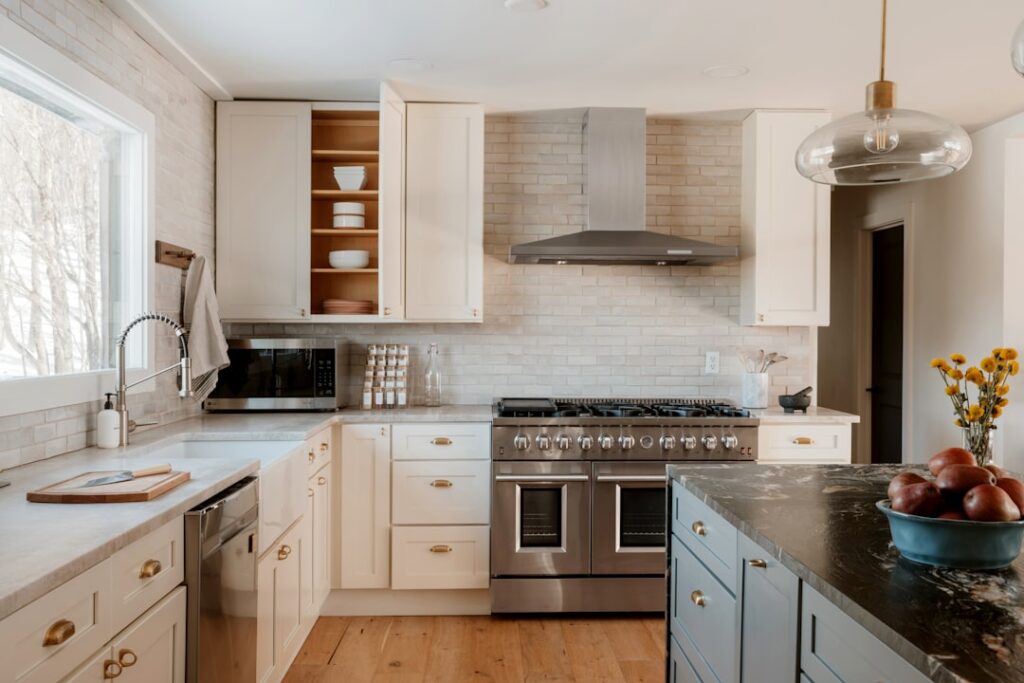
- Stick to Neutrals: White and light gray Shaker cabinets are timeless and appeal to the widest range of buyers.
- Timeless Styles: Avoid “trendy” colors that might look dated in three years. You can always add personality with kitchen cabinet hardware.
- Quality Over Quantity: It’s better to have high-quality stock cabinets than cheap, poorly made custom ones. Check out our thoughts on used kitchen cabinets value to see how well different types hold their worth.
Where to Buy: Warehouse Showrooms vs. Online Distributors
You have two main paths when shopping for stock:
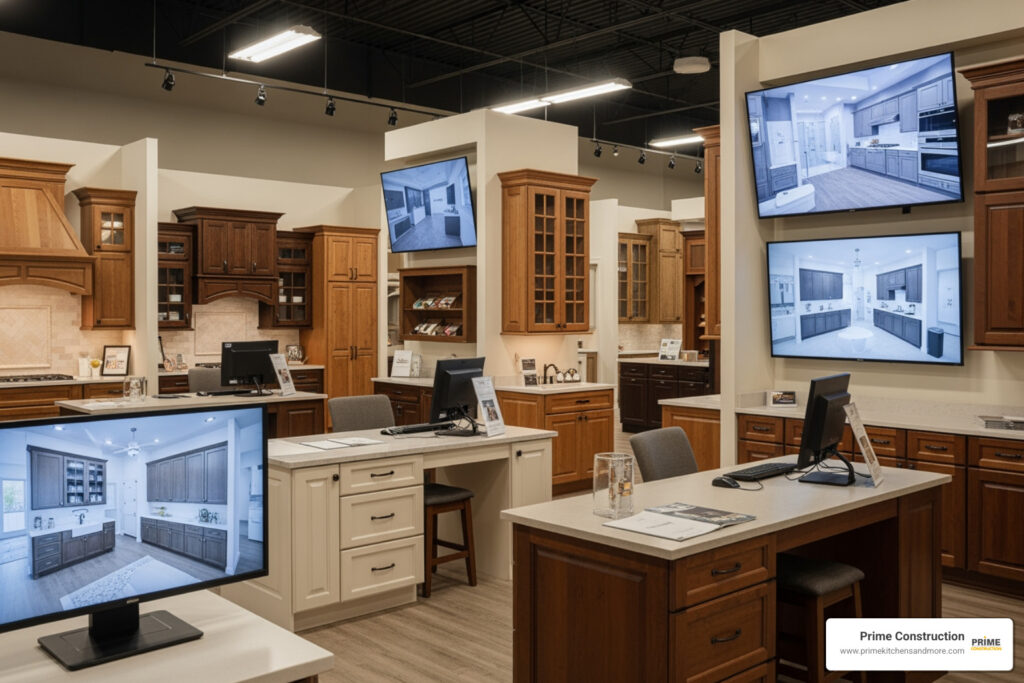
- Big-Box Warehouses: These are great for seeing the product in person and immediate pickup.
- Online RTA Distributors: These often offer up to 50% savings compared to retail stores because they don’t have the overhead of a massive showroom. They ship the cabinets “flat-packed,” and you (or your contractor) assemble them on-site.
For those looking for the best deals, searching for cabinet wholesale near me can uncover local Orlando gems that sell high-quality stock lines directly to the public.
Frequently Asked Questions about Stock Cabinetry
Can Stock Cabinets Be Customized or Painted?
Absolutely! Just because they come off a shelf doesn’t mean they have to stay that way. You can swap out the standard doors for custom cabinet fronts or add decorative crown molding to make them look like expensive custom builds. If you find a great deal on unfinished maple stock cabinets, our Orlando cabinet painting guide can help you achieve a high-end factory finish in any color you desire.
How Much Do Stock Cabinets Cost for a 10×10 Kitchen?
Expect to pay between $2,500 and $2,800 for a standard 10×10 kitchen set. If you go the Ready-to-Assemble (RTA) route, that price can drop as low as $1,504. That this is just for the boxes; you’ll also need to factor in kitchen cabinet installation costs, countertops, and hardware.
Are Stock Cabinets Suitable for DIY Installation?
Yes, they are the most DIY-friendly option on the market. However, “simple” doesn’t mean “easy.” You will need a few essential tools:
- A 4-foot level (the most important tool!)
- A power drill and impact driver
- Cabinet clamps
- Shims (to level the cabinets on uneven Florida floors)
- Stud finder
If the idea of leveling heavy boxes makes your back ache, you can always look for kitchen cabinets remodeling near me to find professional installers in the Orlando area.
Conclusion
Navigating stock kitchen cabinets doesn’t have to be overwhelming. By understanding the standard sizes, focusing on quality materials like plywood and solid wood, and measuring your space with surgical precision, you can achieve a designer look without the designer price tag.
At Prime Kitchens And More LLC, we’ve spent 15 years helping homeowners across Orlando, Apopka, and Seminole County realize their renovation dreams. Whether you need a full kitchen overhaul or just want to explore your options for kitchen-cabinets-orlando-fl, our team is here to ensure your results are nothing short of premium.
Ready to take the next step? Start your kitchen remodeling project in Apopka, FL or visit our Orlando showroom to see how stock cabinetry can work for you!